Cool metal roof colors are paint finishes built to reflect more of the sun’s energy, so the panel runs cooler than ordinary paint in the same shade. Three numbers describe them: solar reflectance, thermal emittance and the Solar Reflectance Index (SRI) that combines the two. Architectural Metal Panels forms standing seam and wall panels in Forney from painted coil that carries published values, and this guide shows how to read them when you pick a panel color for a Texas building.
The short version: light colors reflect the most, cool-pigment dark colors close part of the gap, and the paint system decides how well a color keeps its numbers over the years.
What do the three numbers on a color chart mean?
Each number answers a different question about heat. Read them together, and read the aged values wherever they are published.
| Term | What it measures | Scale | A higher number means |
|---|---|---|---|
| Solar reflectance | Share of incoming sunlight the surface bounces away | 0 to 1 | Less heat absorbed in the first place |
| Thermal emittance | How readily the surface releases heat it did absorb | 0 to 1 | The panel sheds heat faster |
| Solar Reflectance Index (SRI) | Both properties rolled into one index | Standard black is 0, standard white is 100 | A cooler surface in full sun |
What is solar reflectance?
It is the fraction of sunlight a surface reflects across ultraviolet, visible and near-infrared light. A value of 0.30 means 30% bounces away and the rest turns to heat in the panel. Color moves this number more than anything else.
Why does thermal emittance matter?
Because a panel that cannot shed heat stays hot even when it reflects well. Emittance describes how quickly a surface radiates absorbed heat back to the sky. Paint systems publish it next to reflectance, and the two together set how warm the panel runs, so compare both rather than judging a chip by brightness alone.
How does SRI combine the two?
SRI compares a surface with two references, a standard black at 0 and a standard white at 100. Very bright, high-emittance surfaces can score above 100, and some dark or low-emittance surfaces fall below zero. When two colors look alike, the one with the higher SRI is the cooler roof.
Why do cool-pigment dark colors behave differently?
Because a large share of the sun’s energy, roughly half, arrives as near-infrared light we cannot see. Ordinary dark pigments absorb it. Infrared-reflective cool pigments bounce much of it away while still absorbing visible light, so the color looks just as dark but heats up less.
That gives the owner a real choice on a visible roof. A cool-pigment charcoal will not perform like white, but it typically reflects noticeably more than a conventional paint in the same shade. The ranking below is general, not a set of values.
| Color family | Typical reflectance | What to expect |
|---|---|---|
| White, bone and light gray | Highest | The coolest painted surfaces; can glare toward taller neighbors |
| Tan, sandstone and light bronze | High to moderate | A softer look that still reflects well |
| Medium gray, green and red | Moderate | Cool pigments make a clear difference here |
| Dark bronze, charcoal and black with cool pigment | Lower | A dark look with a real gain over ordinary dark paint |
| Dark colors with conventional pigment | Lowest | The hottest painted surfaces |
Do Kynar 500 and SMP finishes hold their reflectance over time?
Most roofs lose some reflectance as they weather, and the paint system largely decides how much. Dirt pickup, chalking and fading all change how a surface handles sunlight. That is why rating programs publish an initial value and a value after about three years outdoors, and the aged number is the better guide.
Kynar 500 and other PVDF finishes resist chalk and fade better than other architectural paints in common use, which helps a color hold its look and, generally, its performance. SMP does well on light colors but chalks and fades sooner. In one widely cited side-by-side case, the SMP house showed obvious fading by year eight, and the Kynar house beside it still looked fresh. Our Kynar 500 vs SMP guide covers the paint makers’ warranties.
Does roof slope change how a color ages?
Yes. A steep roof rinses in every storm, and DFW typically sees around 36 inches of rain a year. A low-slope commercial roof holds dust and pollen longer, so its aged reflectance tends to fall further unless it is rinsed now and then.
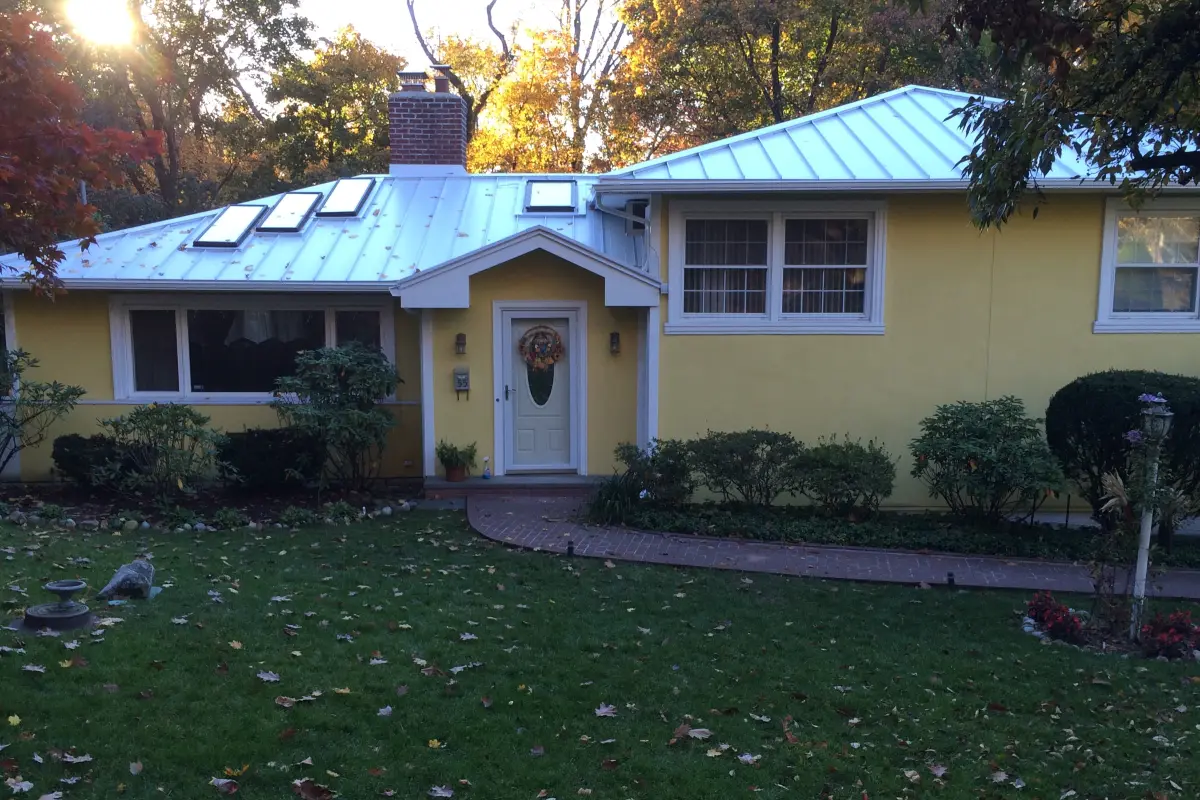
What do ENERGY STAR and Cool Roof Rating Council labels tell you?
Today the listing to look for is the Cool Roof Rating Council (CRRC) rating. The CRRC is an independent program that lists roofing products with tested initial and three-year aged values for solar reflectance and thermal emittance. Participating manufacturers print a rating label, and the online directory lets anyone look up a specific color and finish.
ENERGY STAR once covered reflective roof products as well, and older brochures and chips may still carry the mark. EPA has since sunset its roof products program, so as of 2026 an ENERGY STAR logo on a roofing chart is not a current certification; ask for the CRRC listing instead. Some energy codes and green building programs also set minimum reflectance or SRI values, mostly for low-slope roofs, so a commercial specification may name a number.
How much can a cool metal roof cut attic heat and cooling costs?
Meaningfully, though results vary with insulation, attic ventilation, duct location and the HVAC system. EPA guidance credits reflective roofs with surface temperatures as much as 100 F below those of conventional roofs. Against a dark-gray asphalt shingle roof, cool metal can trim a year’s cooling bill by as much as 25%, the top figure from U.S. Department of Energy studies at Oak Ridge National Laboratory.
Test homes at the Florida Solar Energy Center pointed the same way, with reflective roofs reducing cooling energy by roughly 18 to 26% and peak demand by roughly 28 to 35%; a ventilated air space under the metal adds further savings. Those are study results, not a promise for a given building. They still show why color matters in a region that typically sees around 20 triple-digit days a summer and saw 55 of them in 2023.
Where does a cool roof make the smallest difference?
Where the roof is already well separated from the living space. Deep attic insulation, a sealed and insulated roof deck, or ductwork kept out of the attic all shrink the effect of roof color. The gain is largest when ducts and air handlers sit in a hot, vented attic.
How should you choose a panel color for a DFW building?
Start with a color the owner can live with, then order the version of it with the highest aged SRI in a PVDF finish. Work through this checklist with the owner or design team:
- Decide how visible the roof is. A low-slope commercial roof is barely seen, so a light, high-SRI color is an easy win. A steep street-facing roof shapes how the building reads from the curb, so choose the look first and then its coolest version.
- Compare aged values, not initial ones. Look up the exact color and paint system in the CRRC directory or on the coater’s chart.
- Choose PVDF for dark and bright colors. They show fading first, and PVDF holds them longest.
- Check chips in Texas sun. View physical chips outdoors in the morning and again in the afternoon.
- Think about glare. A white roof below a neighbor’s second-story windows can be harsh on summer afternoons.
- Specify a high-temperature underlayment. Even a light metal roof runs hot, so the installer should use a product rated to about 240 F or more under every color.
What changes on a commercial roof?
Area and specification. A large low-slope roof puts most of a building’s solar gain on one surface, so a light standing seam color can shift cooling loads noticeably, and the project specification may set a minimum SRI. Our commercial panels and edge metal page covers the low-slope panels and edge details we fabricate.
What changes on a home?
Appearance and attic design. Most owners want a color that suits the brick or stone, so the task is finding the coolest version of that color. Our roof panels page shows the profiles each color is formed in.
How do you match trim, gutters and wall panels to a cool roof color?
Bend the trim from the same coil as the panels, and the match takes care of itself. We form rake, eave, ridge and wall trim in our Forney shop from the coil the panels came from, so color, gloss and pigment are identical rather than close.
Gutters deserve the same care. When they come from another supplier’s coil, compare chips side by side, or order gutters from our shop in the roof color. A slight shade difference is easier to live with when the gutter is a deliberate contrast, such as a darker gutter under a light roof. Metal wall panels in the same color and paint system weather at the same rate as the roof, which keeps a two-tone building from drifting apart.
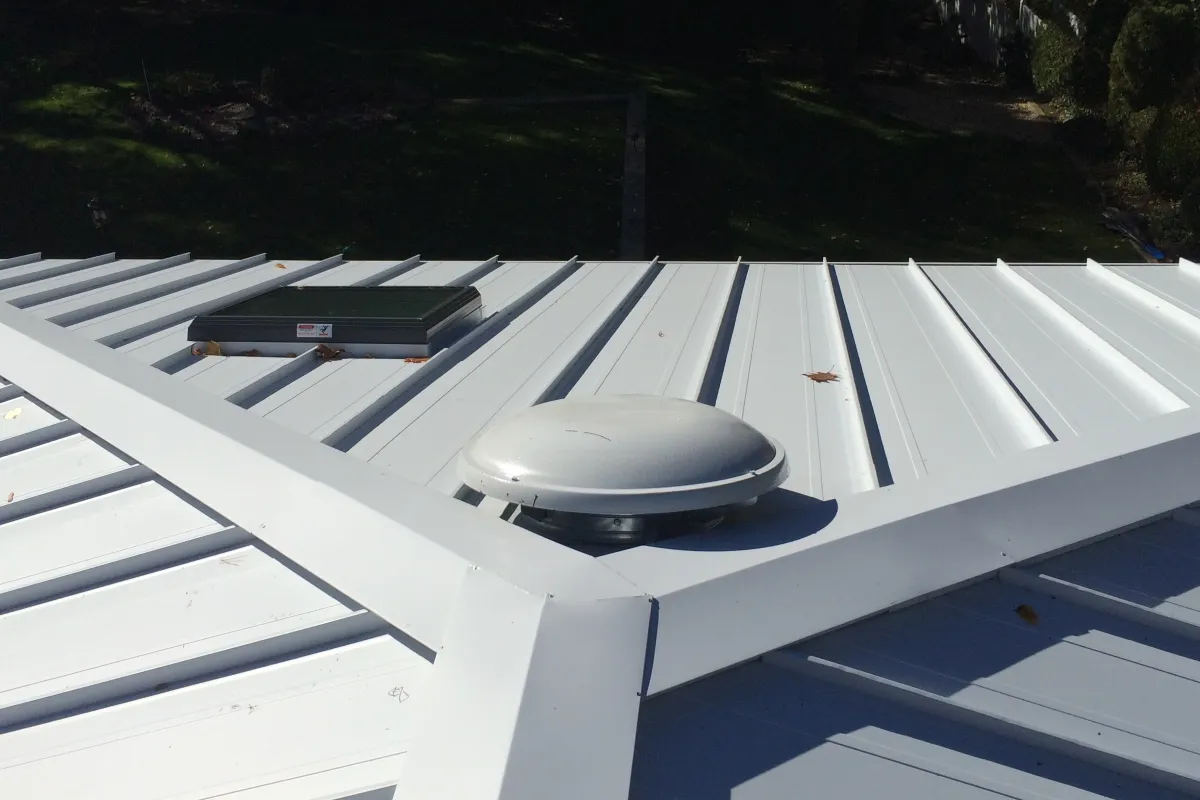
What is the takeaway for a roof in Texas heat?
Color is one of the few roof decisions that affects comfort every summer day. Pick the look you want, choose its cool-pigment version in a PVDF finish, compare aged SRI values and keep the trim on the same coil. That sequence gets the coolest roof that still looks right on the building.
Cool roof color questions for Texas buildings
What SRI should a metal roof have in Texas?
There is no single number for homes. Some energy codes and green building programs set minimum SRI values, mostly for low-slope commercial roofs, so check the project specification there. For a home, compare the aged SRI of the colors the owner likes and order the highest one that suits the house.
Does a white metal roof pay off on a DFW building?
On a low-slope or commercial roof, often yes, because white reflects the most heat and few people see the roof. Where the roof faces the street, appearance tends to win, so look for a mid or dark shade made with infrared-reflective pigment, which claws back some of the gain. Attic insulation and duct location also change the payoff.
Do cool pigments fade faster than regular paint?
Fading depends mostly on the paint system. Kynar 500 and other PVDF finishes resist chalk and fade best, while SMP fades sooner, especially in dark colors. Check the paint maker’s finish warranty for the specific color, since it states the chalk and fade limits.
Does roof color change how hot the attic gets?
Yes, especially over a vented attic. A darker roof absorbs more sunlight and passes more heat down. EPA guidance credits reflective roofs with surfaces as much as 100 F cooler. How much of that reaches the rooms below depends on insulation, ventilation and where the ducts run.
Can a metal roof still get an ENERGY STAR label?
Not as a current certification. EPA sunset its ENERGY STAR roof products program, so as of 2026 the Cool Roof Rating Council directory is where to check tested reflectance and emittance values. Literature showing the ENERGY STAR mark on roofing predates that change.
Does a cool color cost more in materials?
Usually not by itself. Cool pigments run across the PVDF color lines of the major coil coaters, so the price gap is mostly between paint systems. On our list dated October 2026, 24-gauge Kynar 500 roof materials are $9 per square foot of roof and 26-gauge SMP materials are $8.
Request a Written Quote
Describe the panels, trim or sheet metal you need, or attach your takeoff. Expect to hear from Architectural Metal Panels by the next business day.
You can also text roof or wall photos to (972) 332-2809
Rather talk it through? Call (972) 332-2809. Insured in full.
Sources
References checked October 2026; energy results are study findings and vary by building:
- Whole Building Design Guide: metal roofing: EPA cool roof surface temperature guidance
- Green Building Advisor: metal roof SRI ratings: published SRI values for painted metal
- Florida Solar Energy Center: reflective roof study: cooling energy and peak demand results
- MBCI: cool metal roofing research: ORNL and FSEC cooling cost findings
- BD+C: airflow under a metal roof: above-sheathing ventilation
- McElroy Metal: Kynar 500 vs SMP: finish durability
- WFAA: 100-degree days in DFW: average and 2023 counts
- iWeatherNet: DFW rainfall: annual precipitation
- Green Builder Media: underlayments and heat: high-temperature underlayment ratings
Compare cool colors before you order
Tell us the profile and the colors on your short list. We send the Kynar or SMP color chart, point you to the published reflectance values and quote the panels and trim in the color you choose. Call (972) 332-2809 or request a quote online.