Two seam families, one Forney roll-forming shop
Standing Seam Panel Fabrication: Snap-Lock and Mechanical Seam, Cut to Length in Forney
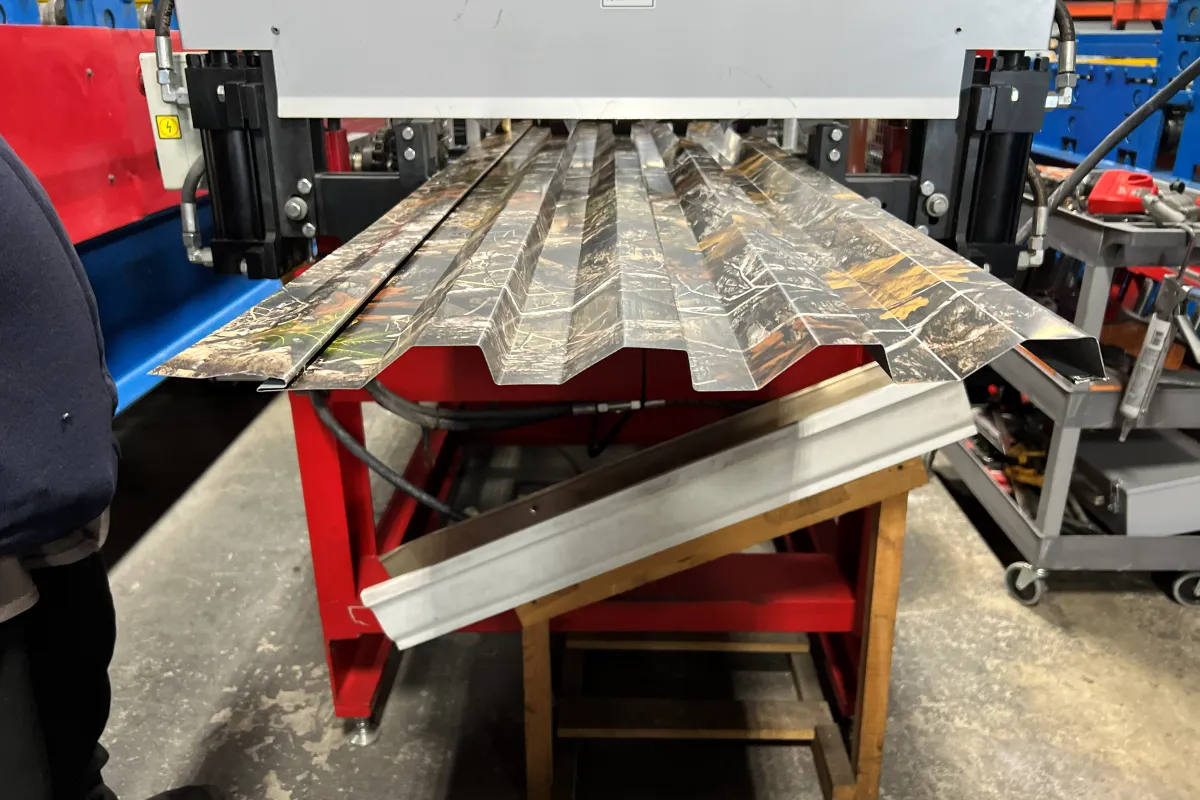
Standing seam panel fabrication is the core of our roof work. Architectural Metal Panels roll-forms snap-lock and mechanical seam panels from 24-gauge Kynar or 26-gauge SMP coil, cuts each one to the length on your takeoff, and bends the ridge, rake, eave and valley trim from matching coil.
Standing Seam Specs at a Glance
These are the typical figures for the two seam families. Your plans, the panel maker’s data sheet and the wind design for the building set the final numbers.
| Spec | Snap-lock | Mechanical seam |
|---|---|---|
| Seam closure | Male leg snaps over the female leg by hand pressure | Folded closed by a hand or electric seamer: one fold for single lock, two for double lock |
| Typical rib height | 1 to 1.75 inch | About 2 inch |
| Typical panel width | 12 to 18 inch | Set by the profile; confirmed on the quote |
| Slope | 3:12 and steeper | Low slopes, with sealant in the seam |
| Attachment | Concealed clips under the seam | Concealed clips under the seam |
| Standard metal | 24-gauge Galvalume, Kynar 500 | 24-gauge Galvalume, Kynar 500 |
| Budget metal | 26-gauge with SMP | 26-gauge with SMP |
| Pan options | Flat, striated or pencil ribs | Flat, striated or pencil ribs |
A pan is the flat field between two seams. Its width, texture and gauge decide how the finished roof reads from the street.
Snap-Lock or Mechanical Seam: Which Does the Roof Need?
Pick snap-lock for most homes and steep roofs, and mechanical seam for low slopes or where the design calls for the strongest seam. Slope decides it more often than price.
When snap-lock is the right panel
Snap-lock goes down fast because the installer closes each seam by hand, with no seaming tool. It suits houses, porches over 3:12, offices and churches with steep roof planes. The shorter rib keeps a quieter profile on a residential roof line.
When to order mechanical seam
A mechanically folded seam locks the legs together, and a double lock wraps them a second time. With sealant in the seam, that detail sheds water on slopes where a snap-lock seam would be pushing its limits. Commercial roofs, long low porches and buildings in open, windy country usually get it. The commercial side is covered on our commercial panels and edge metal page.
The snap-lock vs mechanical seam article walks through the choice in more depth.
Pan Texture and the Oil Canning Question
On a smooth pan, light can catch a gentle waviness that the trade calls oil canning. It is a trait of thin, cold-formed sheet rather than a defect, and the order is the best place to manage it.
- Striations roll shallow lines into the pan that break up reflections.
- Pencil ribs add two or more small ribs that stiffen the flat.
- Narrower panels leave less unsupported pan between seams.
- Heavier gauge holds flatter than lighter sheet across the same width.
- Lower-gloss colors hide waviness better than dark, shiny ones.
A flat deck under the roof matters just as much, and that part belongs to the framer and roofer. The oil canning guide covers the causes in detail.
Clips, Closures and Trim That Ship With the Panels
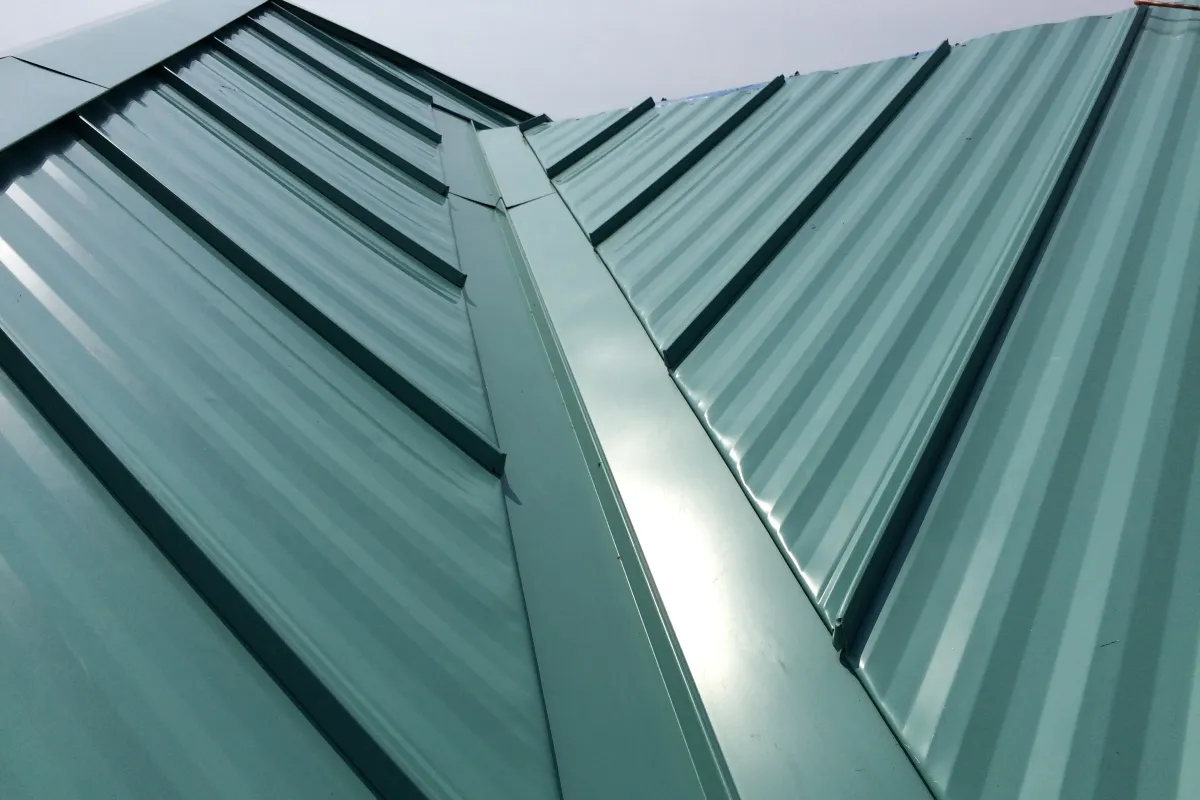
A standing seam order is a system. Panels, clips and trim all come from one source, so the profiles fit together on the roof.
- Clips, the hidden hold-downs that fasten to the deck below each seam, so the field of the panel stays unpierced.
- Ridge and hip caps sized to the rib height, with closures that seal the panel ends.
- Eave and rake trim, drip edge and gable pieces in the same color.
- Valley pans wide enough for the roof planes that drain into them.
- Headwall, sidewall and transition flashings where the roof meets a wall or changes pitch.
All of it is bent on our brakes from coil that matches the panels. Unusual pieces, such as a cricket behind a chimney, start as a sketch with dimensions. See metal flashing for the full list.
Gauge, Paint and Color Choices
Most standing seam orders are 24-gauge Galvalume with Kynar 500. It resists dents better, keeps a flatter pan and holds color longer under strong sun. The 26-gauge SMP panel is the lower-cost choice for shops, sheds and light colors.
Color charts for both paint lines are at the shop, and the paint maker publishes the finish warranty, typically 30 to 35 years for chalk and fade on Kynar 500. Our warranties page explains what keeps that coverage valid, and the Kynar vs SMP comparison lays out the trade-offs. If a roof needs copper instead of painted steel, see copper and zinc.
How a Standing Seam Order Moves Through the Shop
Every order follows the same path from paper to bundle.
- Takeoff check. We read the plans or your list and flag panel lengths that do not add up to the roof planes.
- Choices confirmed. Profile, rib, width, pan texture, gauge and color go on the quote in writing.
- Paperwork if needed. Submittals, data sheets and shop drawings are prepared when the job calls for them.
- Roll-forming. Coil runs through the roll-former and each panel is cut to its listed length.
- Trim bending. Flashings are bent on the brake from the same coil and color.
- Pickup or delivery. We set the date with you when the order is placed and confirm it on the quote.
Contractors who order often should also read the for contractors page.
Standing Seam Panels on Finished Roofs
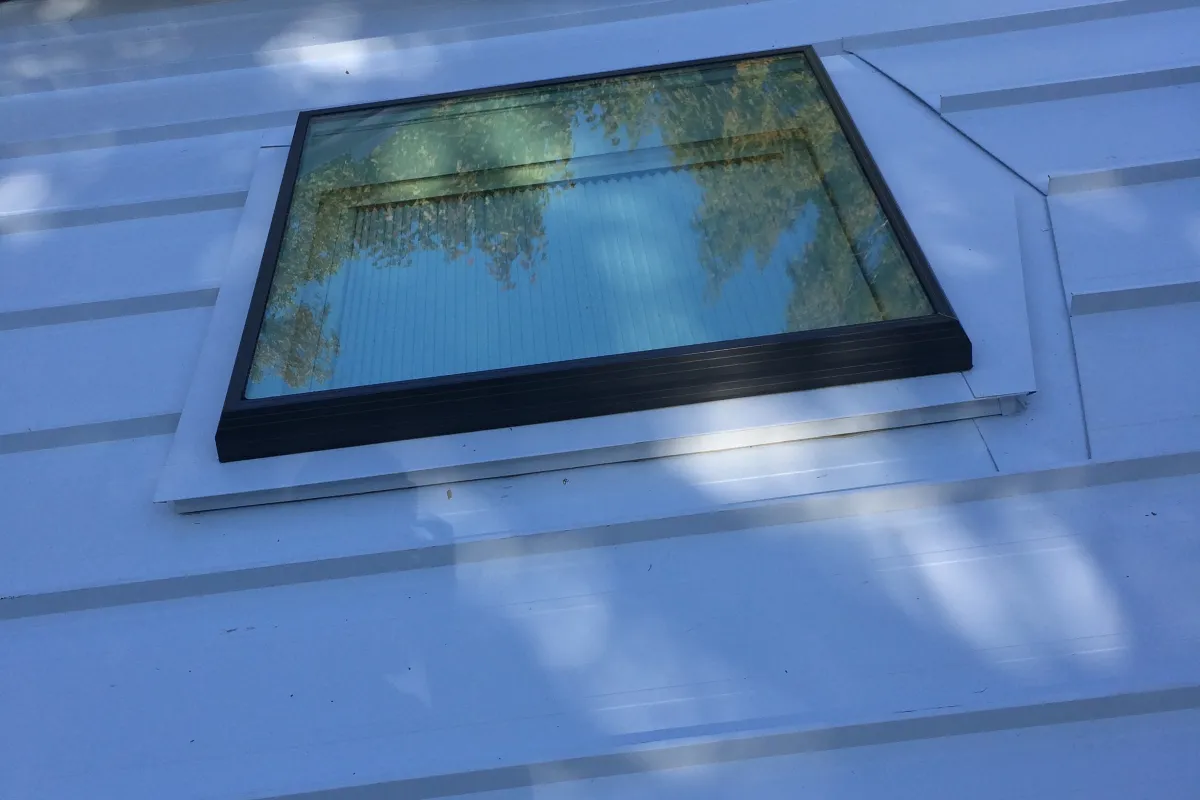
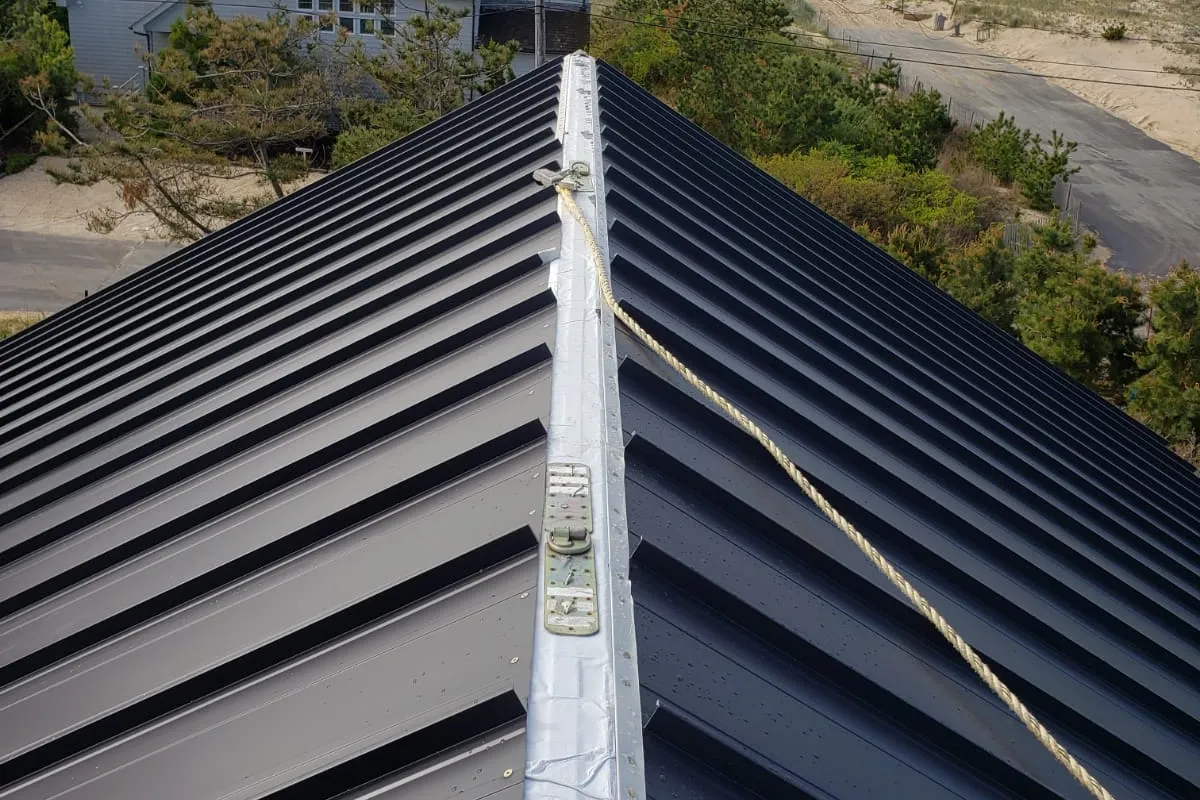
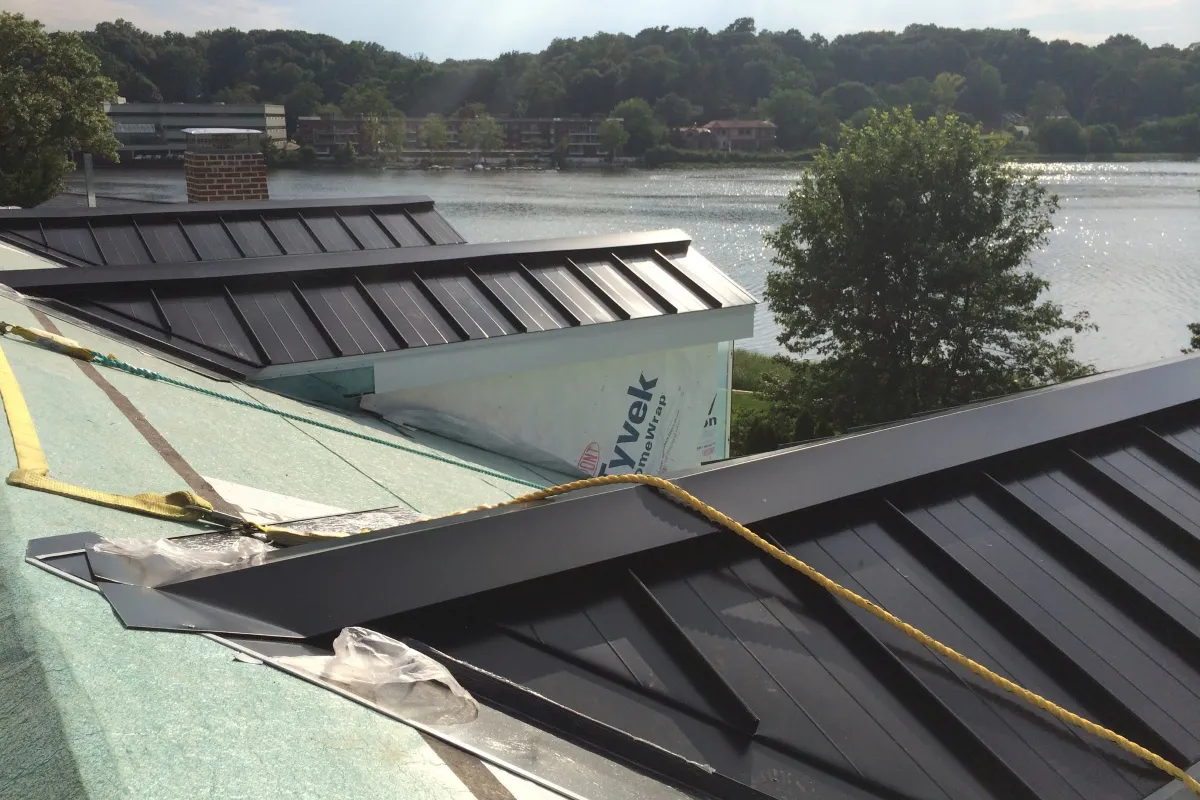
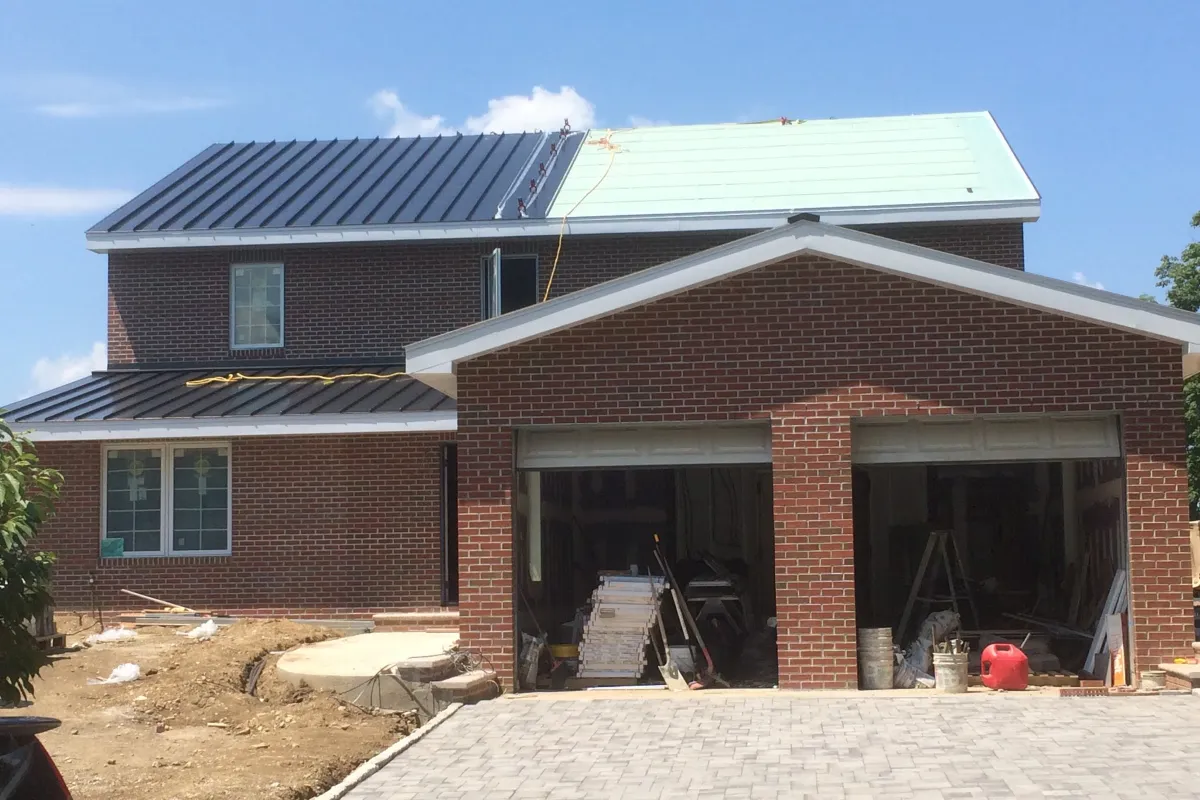
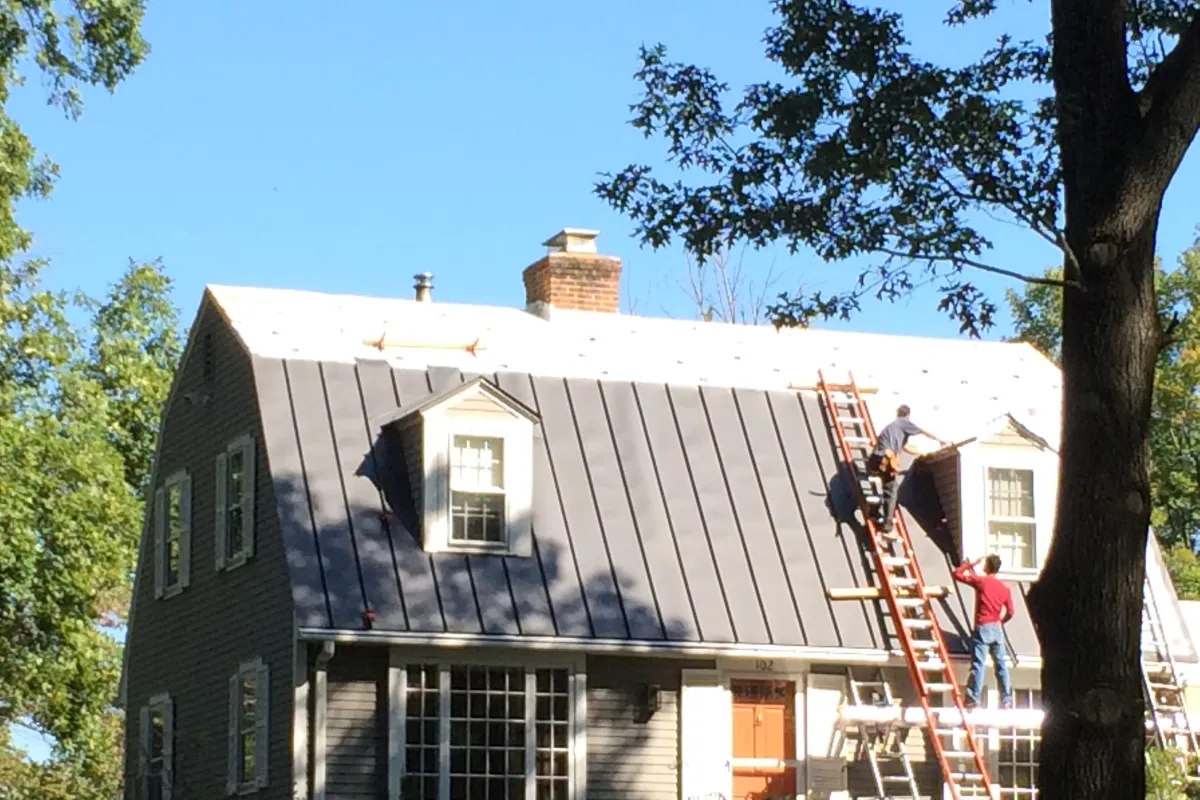
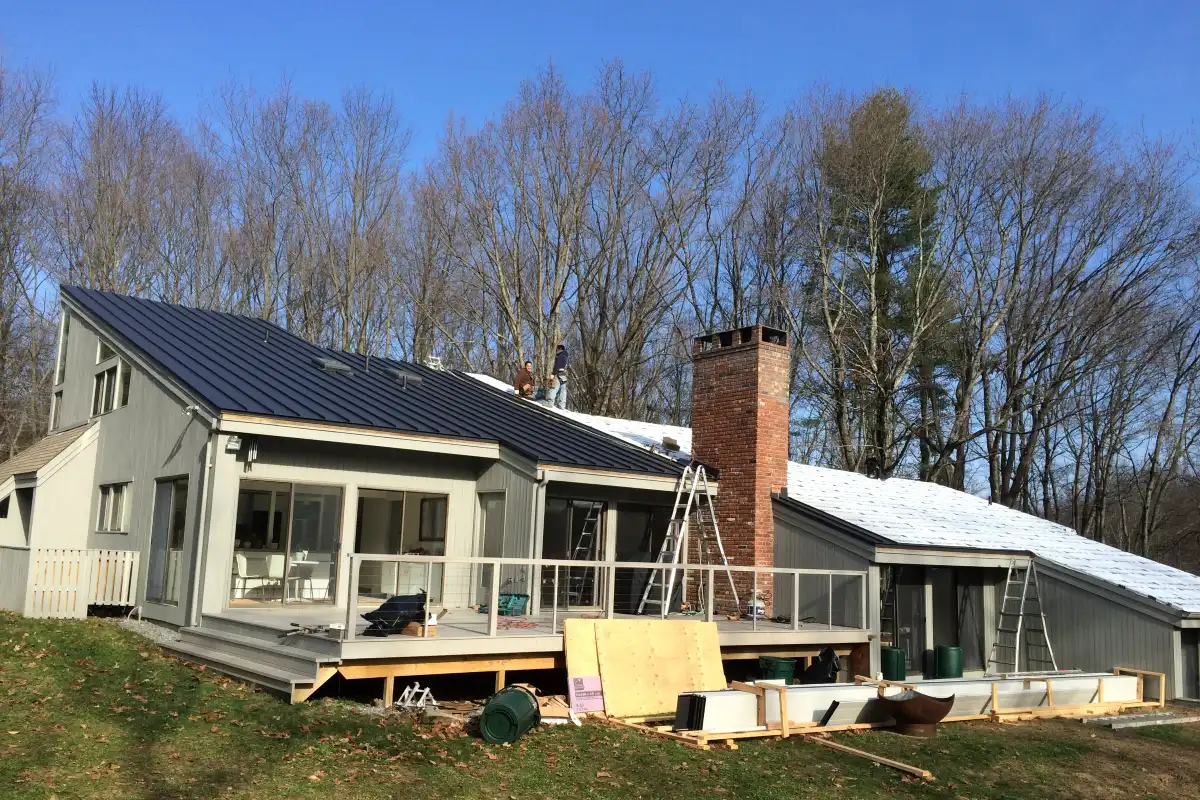
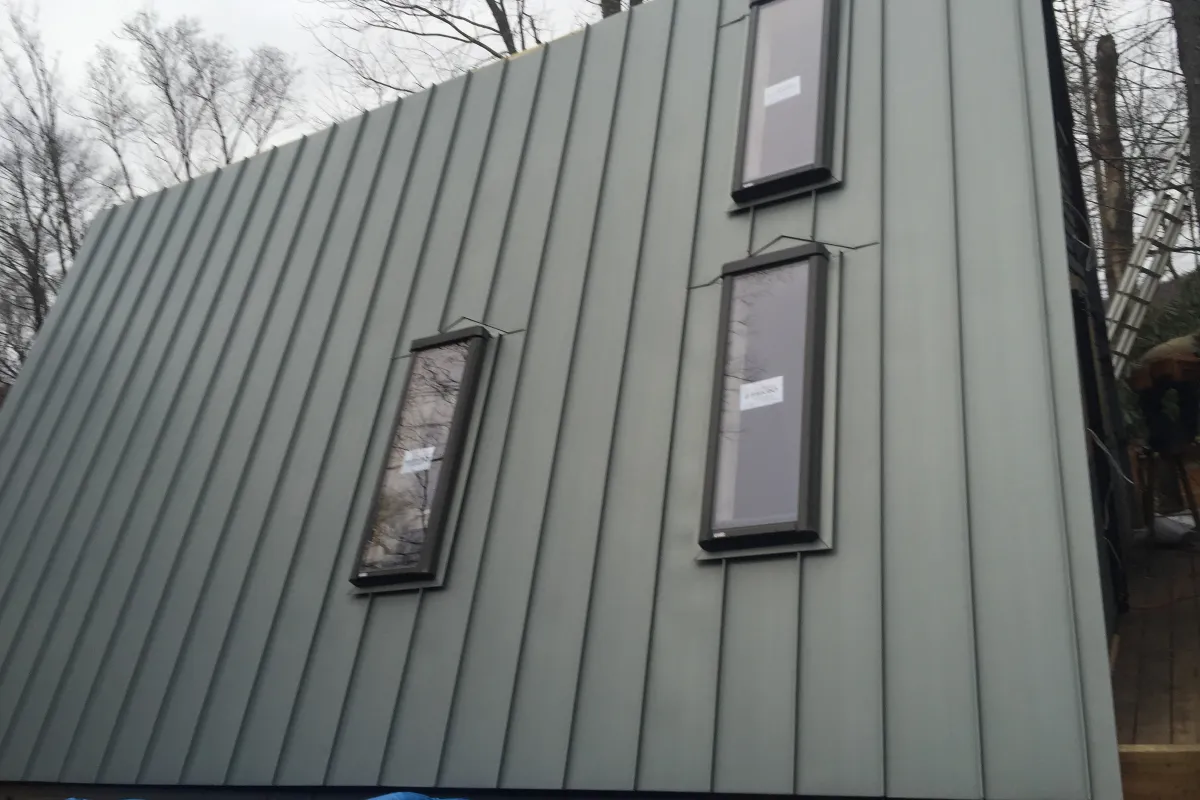
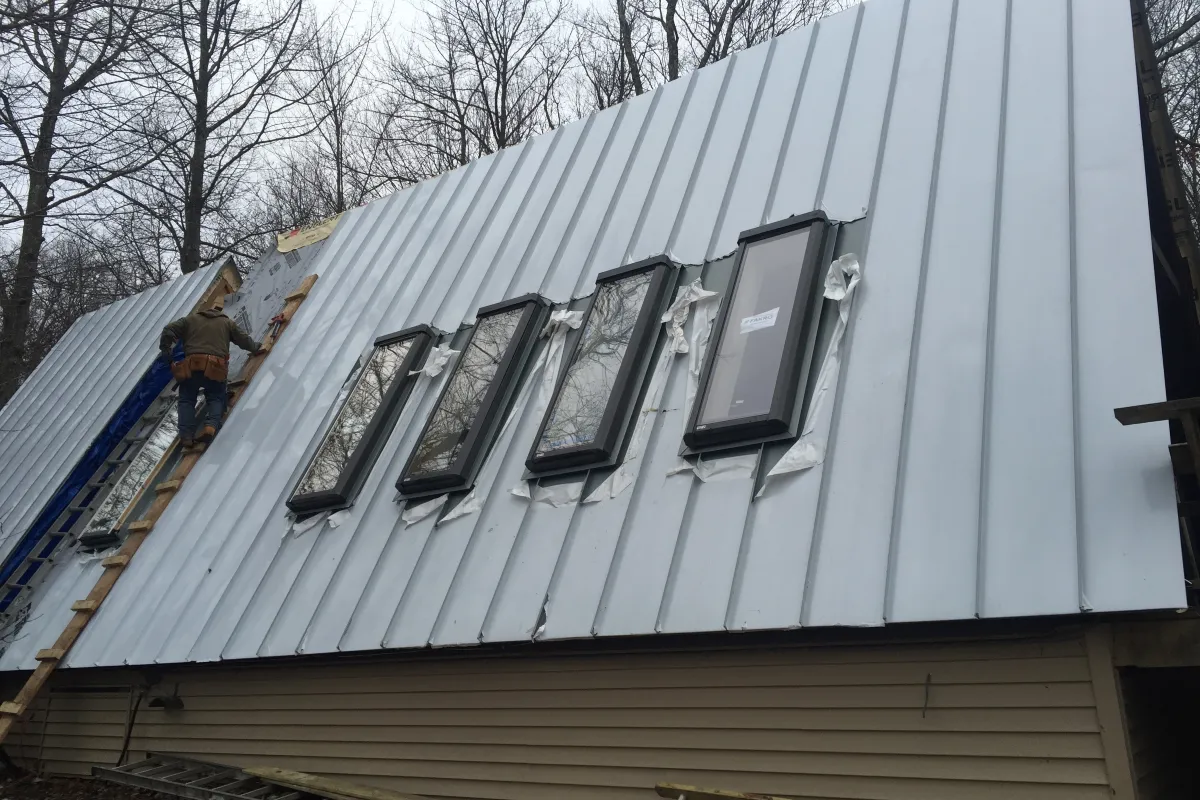
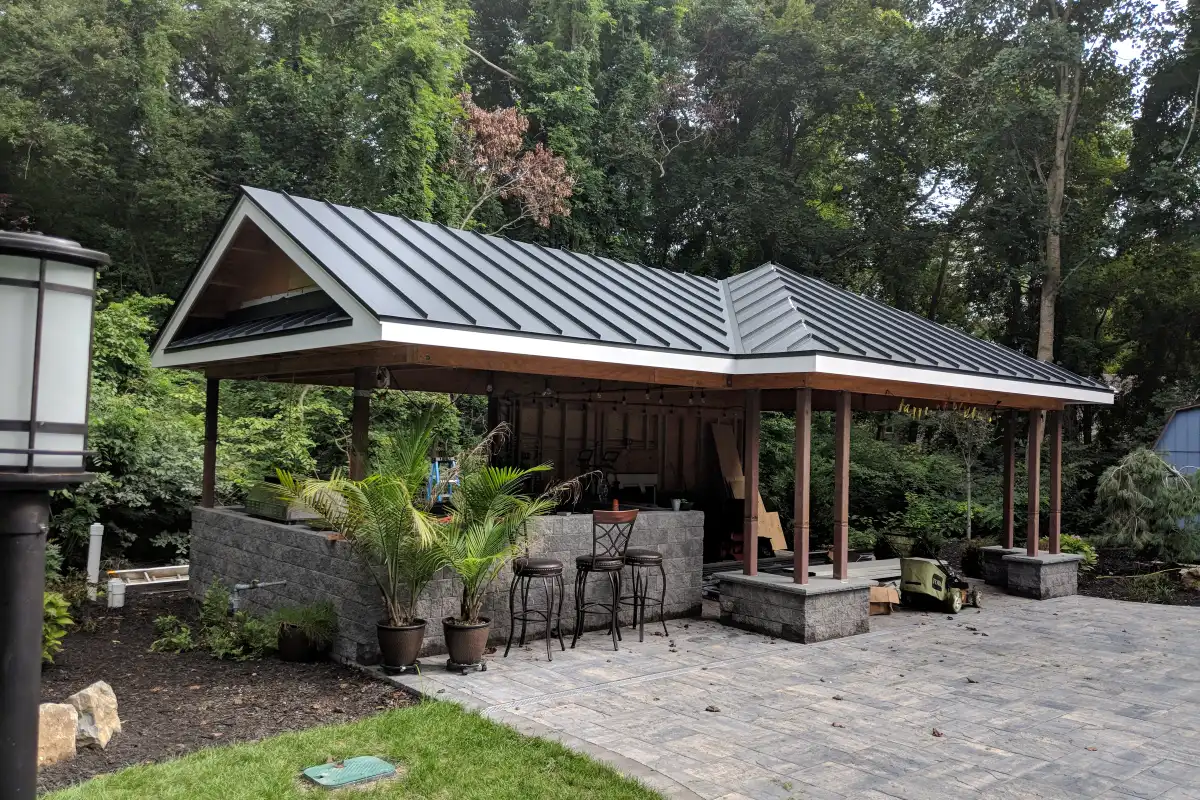
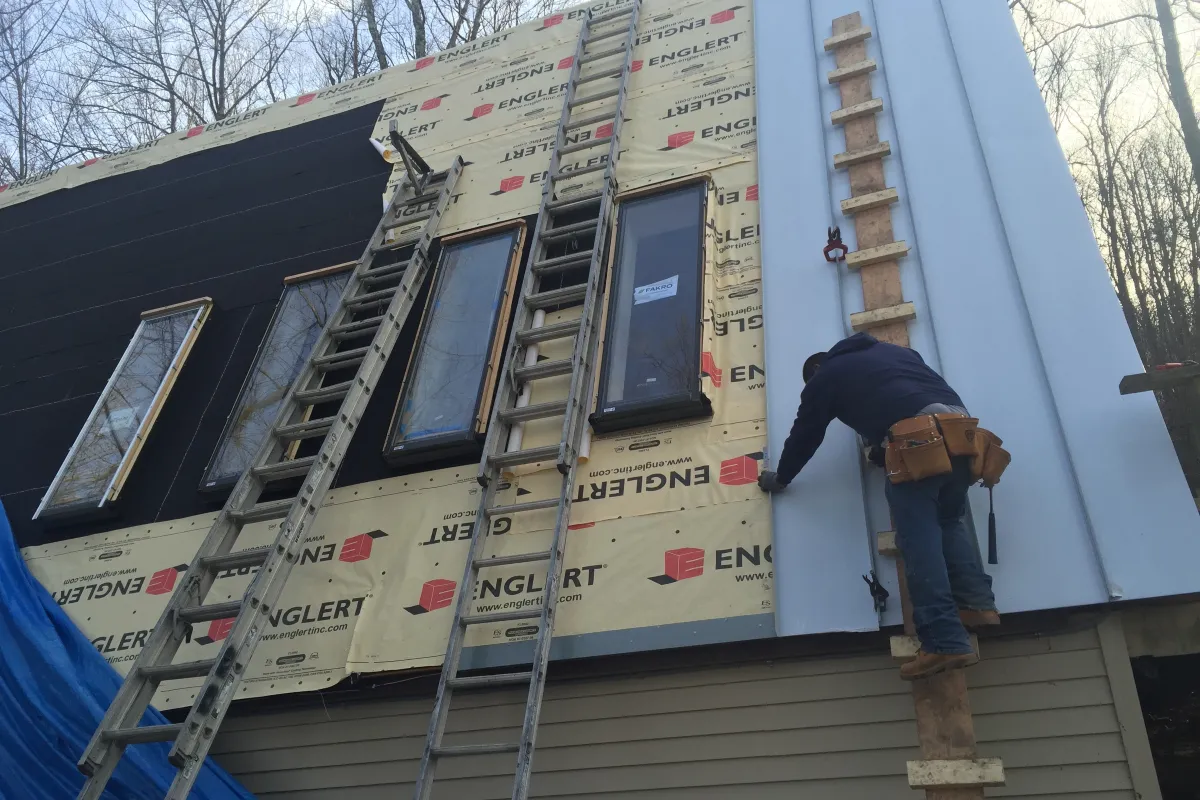
Ridges, hips, valleys, skylights and long runs on steep pitches: the details on this page, seen on roofs of different shapes and colors.
What to Send for a Standing Seam Quote
A complete request gets priced without a round of follow-up calls.
- Roof plans, or a diagram with every plane’s length, eave-to-ridge run and slope
- Snap-lock or mechanical seam, or the slope so we can recommend one
- Rib height, panel width and pan texture, if the design specifies them
- Gauge and paint line, plus the color name from the chart
- The trim list, or a request for us to build it from the plans
- Pickup at the Forney shop or delivery to the job, and the date you need material
Starting materials rates per square foot of roof are on our pricing page, and the roof panels overview compares standing seam with the exposed-fastener lines.
Standing Seam Fabrication Questions
What rib height should I order for a house?
Most homes get a snap-lock panel with a rib in the 1 to 1.75 inch range. The taller end reads bolder from the street, and the shorter end looks quieter. Your architect or roofer may already have a spec.
Can a panel run in one piece from eave to ridge?
Usually. Panels formed in the shop go out up to 40 feet long for pickup or delivery, and longer slopes can be formed on site, up to 200 feet, so one piece can run eave to ridge.
Should I order striated or flat pans?
On most painted steel roofs, striations or pencil ribs are the safer pick because they hide waviness. Flat pans suit narrow panels, heavier gauge and designs that want a smooth face. Ask for both on the quote to compare.
Will you check my panel list against the plans?
Yes, when the plans come with the list. We compare the cut list with the roof planes before coil is run and call you about anything that looks short, long or missing.
Can I order clips and trim only, without panels?
Yes. Trim, flashings and clips can be ordered on their own, as long as we know the panel profile they need to fit.
Do you prepare submittals for a standing seam roof?
On request. Tell us what the architect or general contractor needs, such as data sheets, color samples or shop drawings, and we prepare it with the order.
Request a Written Quote
Describe the panels, trim or sheet metal you need, or attach your takeoff. Expect to hear from Architectural Metal Panels by the next business day.
You can also text roof or wall photos to (972) 332-2809
Rather talk it through? Call (972) 332-2809. Insured in full.
Ready to Price a Standing Seam Roof?
Email the drawings or a cut list, and the written quote will show panel lengths, clip counts and each trim piece. Questions about a profile? Call the shop at (972) 332-2809.